




If you think betting on baseball is just about picking who wins, you are the reason sportsbooks have chandeliers.
Baseball is not a sport of passion; it is a sport of accounting. With 2,430 regular-season games, MLB is the only league where volume is your best friend and variance is your toxic ex. In the NFL, a lucky bounce defines a season. In baseball, luck evens out over six months. That is why the sharps love it.
Forget the “gut feelings.” This is how you actually bet on baseball.
1. The Moneyline: Price Matters More Than Winners
The rookie bettor asks: “Who is going to win tonight?” The sharp bettor asks: “Is this price wrong?”
In baseball, the best teams lose 60 times a year. The worst teams win 60 times a year. The entire profit margin lives in that middle ground.
-
The Math: If you bet the Yankees at -200 every night, you need them to win 66.7% of the time just to break even. If you bet a +150 underdog, you only need to be right 40% of the time.
-
The Trap: Avoid massive favorites (-250 or higher). There is zero value in sweating out a three-hour game to win $40 on a $100 bet. One bad hop or one blown save destroys the profit of your last three wins.
2. The Run Line: The "Home Team Trap"
The Run Line is baseball’s version of the point spread, almost always set at 1.5 runs.
-
Favorite (-1.5): You need your team to win by 2 or more.
-
Underdog (+1.5): Your team can win outright or lose by exactly 1 run.
The Professional Edge: Be extremely careful betting the Home Team on the Run Line (-1.5). Why? If the home team is winning, they do not bat in the bottom of the 9th inning. They lose three crucial outs—three opportunities to score that extra run you need to cover the spread. Road favorites are mathematically superior for Run Line betting because they are guaranteed nine full innings of at-bats.
3. Totals (Over/Under): Respect the Elements
Football is played in stadiums; baseball is played in parks. Every park is a unique ecosystem that drastically alters the total.
-
Weather is King: In Wrigley Field, a 10 mph wind blowing out turns pop-ups into homers. In Oracle Park, the marine layer turns homers into flyouts. Check the air density and wind direction before you even look at the pitcher’s ERA.
-
The Umpire Factor: Yes, they are human, and yes, they have biases. Some umpires have a strike zone the size of a postage stamp (great for Overs); others will call a strike if the ball is in the same zip code as the plate (hammer the Under).
4. The "First 5 Innings" (F5): Bypass the Heartbreak
This is the sharpest tool in the shed. How often have you nailed a handicap, your starting pitcher throws a gem, and then the middle relief guy comes in and sets the stadium on fire?
The Fix: Bet the First 5 Innings (F5) line. You are betting on the score after five complete innings. This isolates the starting pitchers and eliminates the bullpen variables. If you did your research on the starters, why let a random reliever ruin your ticket?
5. Prop Betting: Fade the Narrative
Sportsbooks know that the public loves stars. They inflate the lines on props for players like Shohei Ohtani or Aaron Judge because they know "Joe Public" will bet the Over blindly.
Where the value lives:
-
Strikeout Props: Look for high-strikeout pitchers facing teams that swing and miss often.
-
Total Bases: Instead of betting a player to hit a Home Run (high risk), bet their Total Bases Over. A double and a single cash the ticket just the same, often with less volatility.
The Golden Rules of the Diamond
-
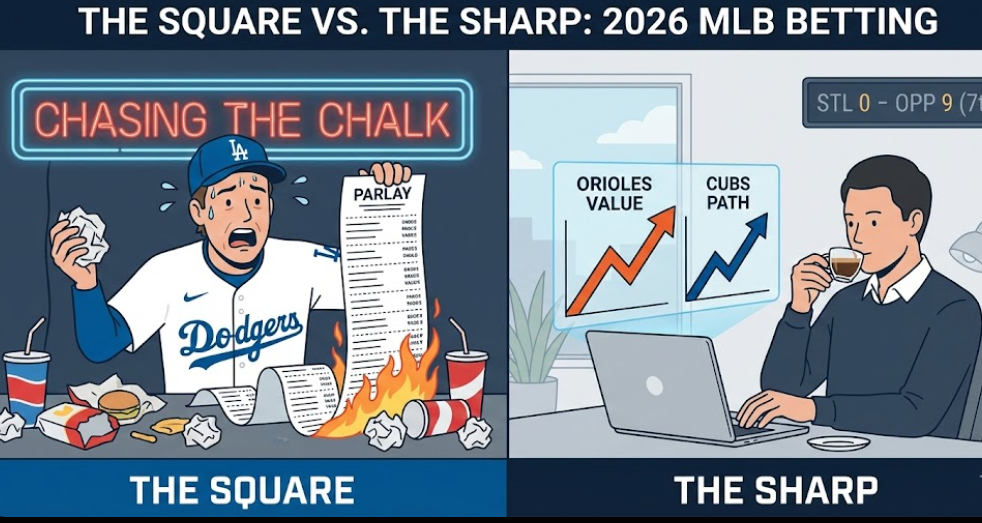
Don’t Chase Parlays: Baseball is too random for 5-leg parlays. Keep it to straight bets. If you must parlay, correlate them (e.g., Team A to win AND Team A Total Runs Over).
-
Shop for Lines: Baseball lines vary wildly between books. One book might have the Mets at -130, another at -140. That 10-cent difference is the difference between a winning season and a losing one.
-
Manage Your Bankroll: Flat betting is boring, but it works. Bet the same unit size (1% to 3% of your bankroll) on every game. Do not double down because you lost the afternoon game.
So what did we learn?: Baseball betting is a grind. It is not about getting rich on Tuesday; it is about being up units in October. Treat it like a business, respect the variance, and for the love of the game, never trust a bullpen on the road.